What If Earth Lost Electricity for 7 Days?
Imagine waking up tomorrow and suddenly discovering that electricity across the world had completely stopped working.
No internet.
No mobile networks.
No lights.
No ATMs.
No air conditioners.
No charging.
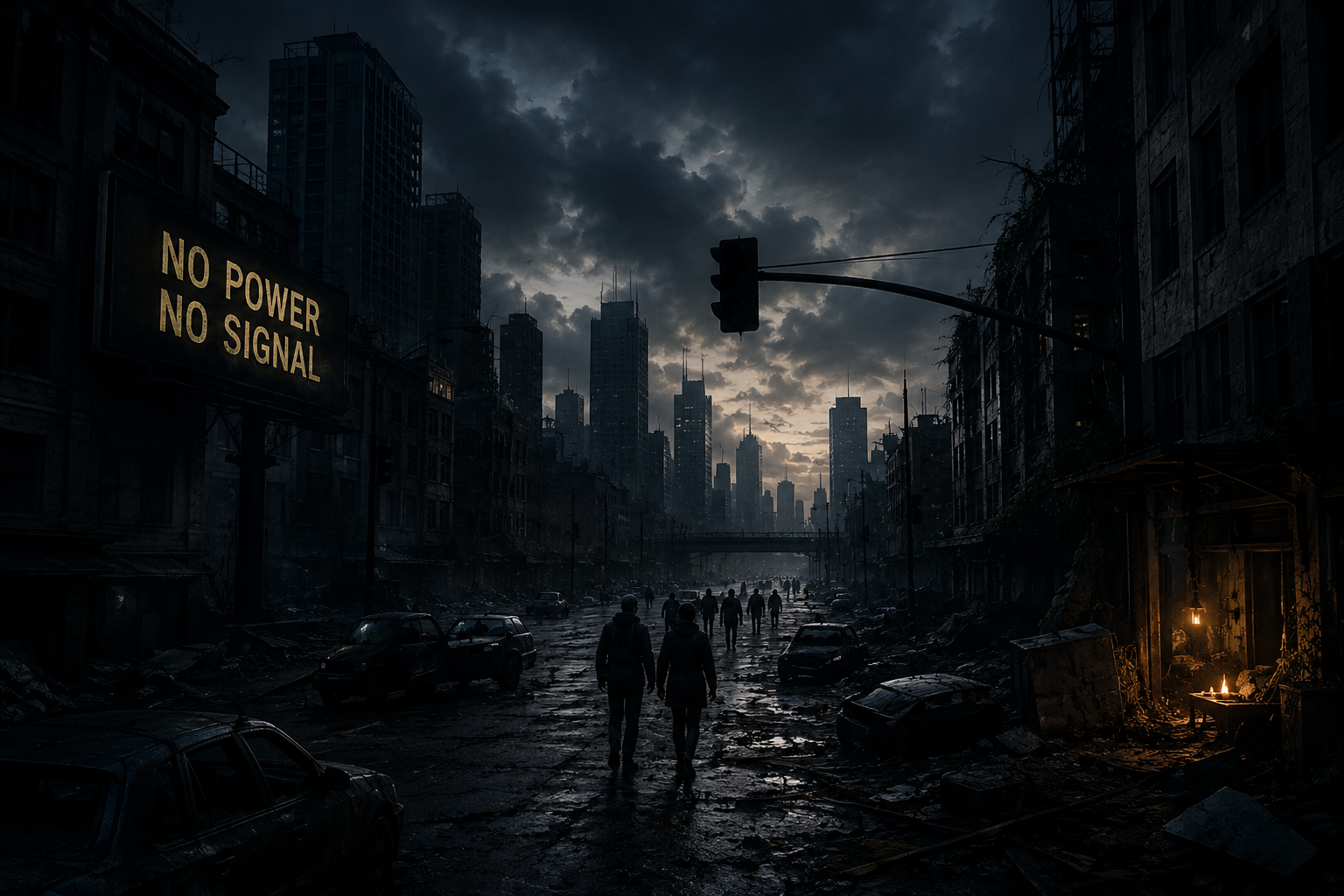
At first, it might sound like a temporary inconvenience. But if the entire planet lost electricity for 7 days, modern life would change dramatically within hours.
According to research from the World Economic Forum, global infrastructure is becoming increasingly dependent on digital and electrical systems.
Here’s what could actually happen.
Day 1: Confusion and Panic Begin
The first few hours would feel strange but manageable.
People would check phones, restart routers, and assume the outage was temporary. But as time passed, panic would slowly grow.
Traffic lights would stop working.
Elevators would freeze.
Mobile towers would fail.
Most internet services would disappear.
Cities would quickly become chaotic as millions tried to understand what was happening.
Day 2: Communication Starts Collapsing
Without electricity, communication systems would begin shutting down completely.
Phones would die once batteries drained.
Television and radio stations would struggle.
Online banking would stop.
Digital payments would fail.
People would suddenly realize how dependent modern society is on electricity.
Cash would become valuable again almost overnight.
Recent studies by MIT Technology Review have explored how vulnerable modern communication systems can become during large-scale infrastructure failures.
Day 3: Food Problems Begin
Supermarkets rely heavily on refrigeration and digital systems.
Within days:
- Frozen food would spoil
- Supply chains would stop
- Restaurants would close
- Drinking water systems could become unreliable
People in large cities would begin rushing to buy whatever food remained.
Organizations like the World Health Organization have previously highlighted how power disruptions can affect food safety and public health systems.
Day 4: Hospitals Under Pressure
Hospitals use backup generators, but fuel supplies are limited.
Critical medical equipment depends on electricity:
- Ventilators
- Refrigeration for medicines
- Emergency systems
- Surgical equipment
Medical services would become extremely difficult in many areas after several days.
The backup systems used by hospitals are often studied by agencies such as Centers for Disease Control and Prevention (CDC) during emergency preparedness planning.
Day 5: Fuel and Transportation Problems
Gas stations need electricity to pump fuel.
Air travel would almost completely stop.
Public transportation systems would struggle.
Traffic congestion would worsen in major cities.
Global trade would slow down dramatically.
The global transportation network heavily relies on electricity and digital systems, as explained by National Geographic in several infrastructure-related reports.
Day 6: Society Begins Adapting
Communities would likely start helping each other survive.
People may:
- Share food
- Create local support groups
- Use candles and fire for light
- Spend more time outdoors
- Rediscover offline activities
Ironically, many people might also experience less screen stress and more face-to-face interaction.
Day 7: The World Changes Forever
Even after power returned, the psychological impact would remain.
Governments and companies would likely:
- Invest heavily in backup systems
- Improve power grid security
- Prepare for future emergencies
- Rethink global infrastructure
The event would become one of the biggest moments in human history.
Final Thoughts
Electricity powers almost every part of modern life, yet most people rarely think about it.
A global blackout lasting seven days would remind humanity how fragile modern civilization truly is.
The real question is:
Would society become stronger after such an event — or more dependent than ever before?
Experts from NASA and other scientific organizations continue researching how future technological risks could impact human civilization.