
El Niño Is Back: Why Everyone Is Talking About It
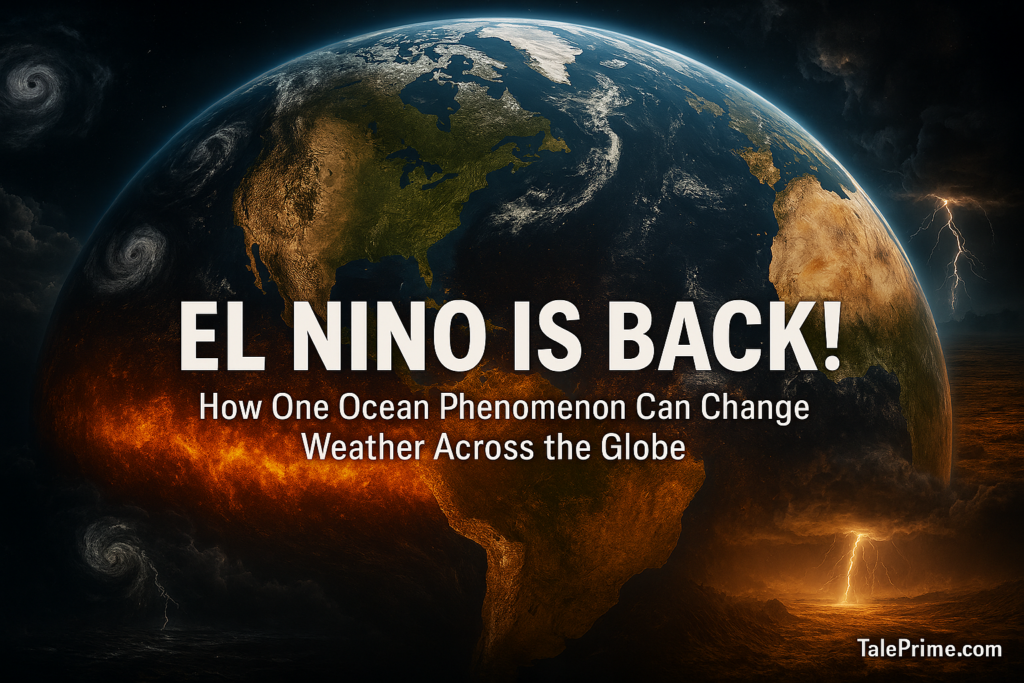
Imagine a climate event so powerful that it can influence rainfall in India, trigger floods in South America, cause droughts in Australia, and even affect food prices around the world.
That phenomenon is called El Niño, and every time it appears, scientists, farmers, governments, and weather enthusiasts pay close attention.
But what exactly is El Niño, and why does it have such a big impact on our planet?
What Is El Niño?
El Niño is a natural climate pattern that occurs when surface waters in the central and eastern Pacific Ocean become unusually warm.
While it begins in the Pacific Ocean, its effects spread across the globe. Changes in ocean temperatures influence wind patterns, rainfall, storms, and temperatures in many countries.
The term “El Niño” means “The Little Boy” in Spanish because fishermen in South America noticed the warming waters often appeared around Christmas.
Learn more about El Niño and climate patterns
Why Is El Niño So Important?
El Niño doesn’t just affect the weather—it can influence agriculture, water supplies, energy production, and even the economy.
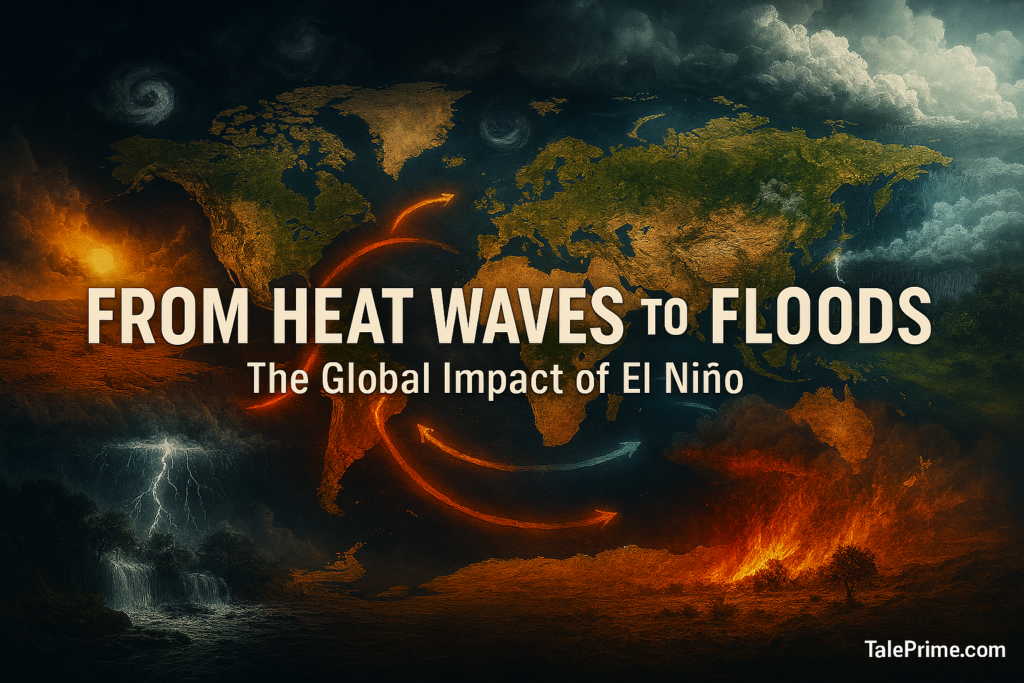
Some common impacts include:
- Increased heat waves
- Reduced rainfall in some regions
- Heavy rainfall and flooding in others
- Changes in crop production
- Higher food prices
- Increased risk of wildfires
How Does El Niño Affect India?
India closely monitors El Niño because it can influence the monsoon season.
During strong El Niño years:
- Monsoon rainfall may become weaker.
- Some regions can experience drought-like conditions.
- Water reservoirs may receive less replenishment.
- Agricultural production can be affected.
However, every El Niño event is different, and its effects can vary from year to year.
Official Indian monsoon and weather updates
Surprising Effects Around the World
1. Floods in South America
Countries along the Pacific coast often receive heavier rainfall than normal, increasing flood risks.
2. Droughts in Australia
Australia frequently experiences hotter and drier conditions during El Niño years.
3. Warmer Global Temperatures
El Niño can contribute to some of the hottest years ever recorded.
4. Changes in Marine Life
Warmer ocean waters can disrupt fish populations and marine ecosystems.
5. Increased Wildfire Risk
Hot and dry conditions can create ideal environments for large wildfires.
El Niño vs La Niña
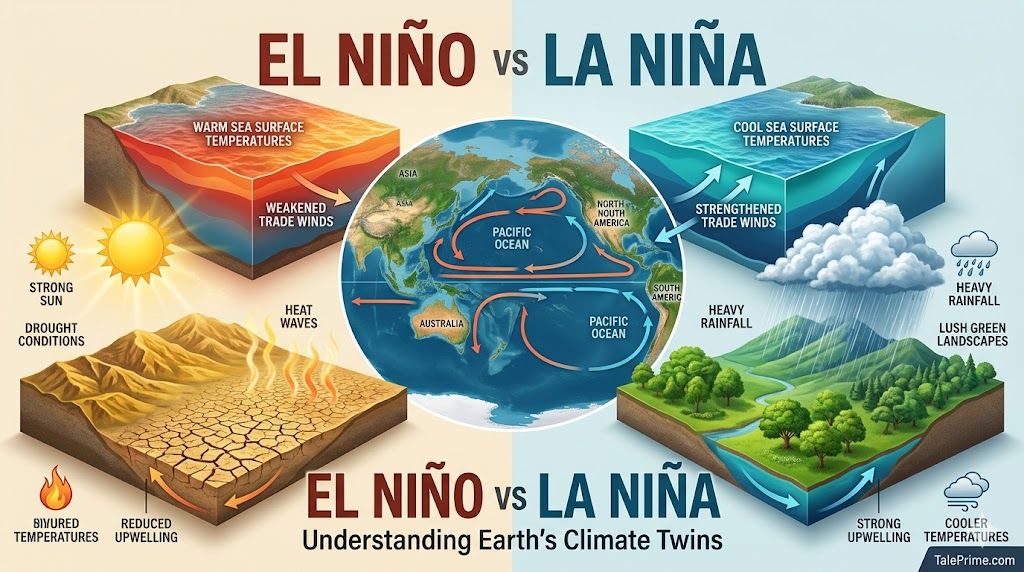
Many people hear these two terms together.
El Niño
- Warmer Pacific Ocean waters
- Often brings hotter global temperatures
La Niña
- Cooler Pacific Ocean waters
- Often produces opposite weather effects
Think of them as two different phases of a natural climate cycle.
Explore the science behind El Niño
Can We Stop El Niño?
No. El Niño is a naturally occurring climate phenomenon.
Scientists cannot prevent it, but modern forecasting helps governments and communities prepare for its impacts months in advance.
What Can Individuals Do?
While we cannot control El Niño, we can stay prepared by:
- Following weather updates
- Conserving water during dry periods
- Preparing emergency supplies for extreme weather
- Supporting sustainable environmental practices
The Bottom Line
El Niño may begin in the Pacific Ocean, but its effects can be felt across the world. From rainfall and droughts to food prices and heat waves, this powerful climate pattern reminds us how connected our planet truly is.
As scientists continue to monitor changing ocean temperatures, understanding El Niño helps us prepare for the challenges and opportunities it may bring.
The next time you hear “El Niño” in the news, you’ll know it’s much more than a weather term—it’s one of the most influential climate phenomena on Earth.
FAQs
1. What is El Niño in simple words?
Ans. El Niño is a climate pattern where Pacific Ocean waters become warmer than usual and affect weather worldwide.
2. How often does El Niño occur?
Ans. It typically occurs every 2 to 7 years.
3. Does El Niño affect India?
Ans. Yes, it can influence monsoon rainfall and increase the chances of dry conditions in some years.
4. Is El Niño dangerous?
Ans. It can contribute to floods, droughts, heat waves, and other extreme weather events.
5. What is the opposite of El Niño?
Ans. La Niña, which occurs when Pacific Ocean waters become cooler than normal.