
Immortal Jellyfish: The Creature That Can Potentially Live Forever
Introduction
What if there was an animal that could cheat death and potentially live forever?
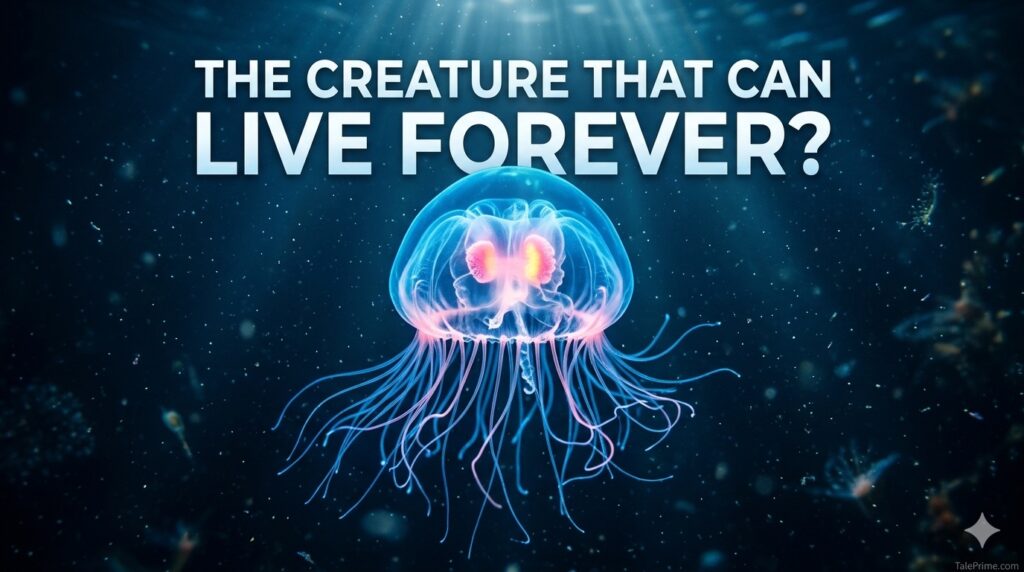
It may sound like science fiction, but such a creature actually exists. Meet the Immortal Jellyfish, a tiny marine animal that has amazed scientists around the world.
Unlike most living things, this jellyfish has a unique ability to reverse its life cycle and become young again. Because of this extraordinary skill, it has earned the nickname “the immortal jellyfish.”
Let’s dive into one of nature’s most fascinating mysteries.
What Is the Immortal Jellyfish?
The Immortal Jellyfish is scientifically known as Turritopsis dohrnii.
It is a small jellyfish, usually less than 5 millimeters wide, making it smaller than a fingernail.
Despite its tiny size, it possesses a biological ability that no other known animal can perform quite the same way.
Scientists first discovered its remarkable powers in the late 20th century, and it has been a subject of research ever since.
Why Is It Called Immortal?
Most animals follow a simple life cycle:
Birth → Growth → Adulthood → Death
The Immortal Jellyfish is different.
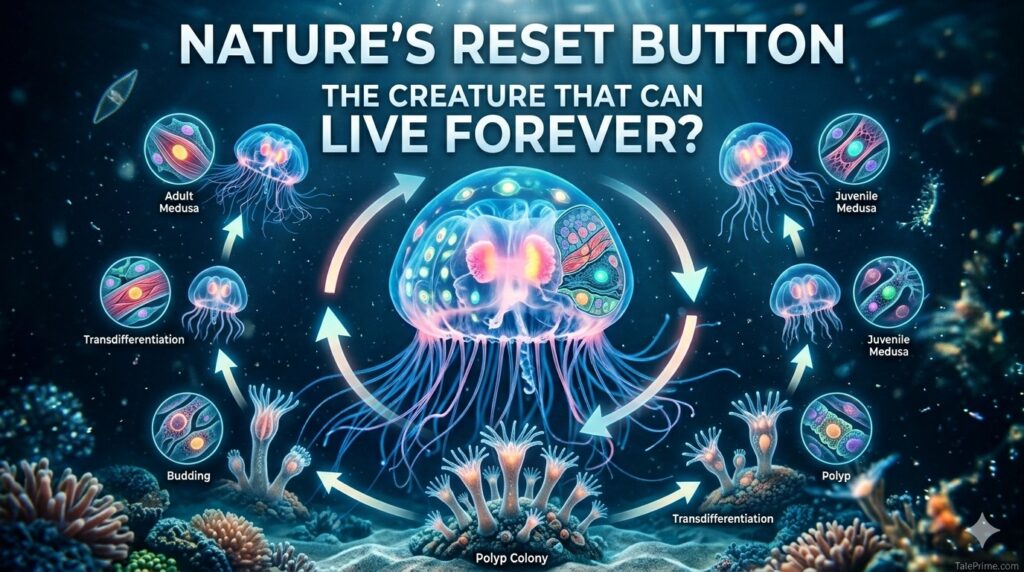
When it becomes injured, stressed, sick, or old, it can transform its adult cells back into a younger stage known as a polyp.
In simple terms, it can hit a biological “reset button.”
After becoming a polyp, it can grow into a new adult jellyfish all over again.
This process can theoretically happen repeatedly, making it potentially biologically immortal.
Does It Really Live Forever?
Not exactly.
The jellyfish can still die from:
- Predators
- Disease
- Starvation
- Environmental changes
However, unlike most animals, it does not appear to die naturally from old age.
That’s why scientists call it “biologically immortal” rather than truly immortal.
How Does It Reverse Aging?
The secret lies in a process called transdifferentiation.
This allows one type of cell to transform into another type of cell.
Imagine if a skin cell in your body suddenly became a brain cell.
That is essentially what happens within the jellyfish.
Scientists believe studying this process could one day help us better understand aging and cell regeneration in humans.
Where Can It Be Found?
The Immortal Jellyfish originally came from the Mediterranean Sea.
Today, it has spread to oceans around the world, often traveling in ships’ ballast water.
It can now be found in:
- Mediterranean Sea
- Atlantic Ocean
- Pacific Ocean
- Coastal waters in many countries
Because it is so tiny, it often goes unnoticed.
Could Humans Learn Its Secret?

This is one of the biggest questions in science.
Researchers hope that studying the jellyfish’s ability to regenerate cells may provide insights into:
- Aging
- Tissue repair
- Stem cell research
- Regenerative medicine
While humans are nowhere near achieving biological immortality, the Immortal Jellyfish may help unlock important medical discoveries in the future.
Amazing Facts About the Immortal Jellyfish
1. It’s Smaller Than Your Fingernail
Most adults measure less than 5 mm across.
2. It Can Reverse Its Life Cycle
Very few creatures can do anything similar.
3. It Lives in Oceans Worldwide
Originally Mediterranean, now found globally.
4. It Fascinates Scientists
Researchers continue studying its unusual biology.
5. It May Hold Clues to Aging
Its regenerative abilities could inspire future medical breakthroughs.
Final Thoughts
The Immortal Jellyfish proves that nature still has incredible secrets waiting to be discovered.
Although it isn’t truly invincible, its ability to repeatedly return to a youthful state makes it one of the most extraordinary creatures on Earth.
For now, humans can only dream of having such a remarkable reset button.
But who knows? The tiny Immortal Jellyfish might one day help scientists uncover new ways to fight aging and disease.
FAQ
1. What is the Immortal Jellyfish?
Answer: The Immortal Jellyfish (Turritopsis dohrnii) is a small jellyfish capable of reversing its life cycle and returning to a younger stage.
2. Can it really live forever?
Answer: It can potentially avoid death from aging, but it can still die from predators, disease, or environmental factors.
3. Where is it found?
Answer: It is found in oceans around the world, including the Mediterranean, Atlantic, and Pacific Oceans.
4. Why do scientists study it?
Answer: Scientists hope its unique cell regeneration abilities can provide insights into aging and regenerative medicine.




Pingback: 15 Amazing Human Body Facts That Sound Fake (But Are True)