
5 Untold Stories That Quietly Changed History Forever
Have you ever wondered how tiny, forgotten moments end up changing the entire world?
We’re taught history through big dates, famous battles, and household names. But behind the scenes, history is often written by accident, luck, or sheer absurdity.
Here are 5 mind-blowing untold stories that quietly altered the course of human history—and why you’ve probably never heard of them.
1. The Bear That Fought in World War II
When you think of decorated war heroes, you usually imagine brave soldiers in uniform. You probably don’t picture a 440-pound Syrian brown bear named Wojtek.
In 1942, Polish soldiers exiled in Iran adopted an orphaned bear cub. As Wojtek grew, he didn’t just become a mascot—he became an officially enlisted private in the 22nd Artillery Supply Company. He drank beer, ate cigarettes, and slept in tents with the troops.
During the bloody Battle of Monte Cassino in 1944, Wojtek did something unthinkable: he stepped up to carry heavy 100-pound crates of live artillery ammunition through heavy gunfire without dropping a single box.
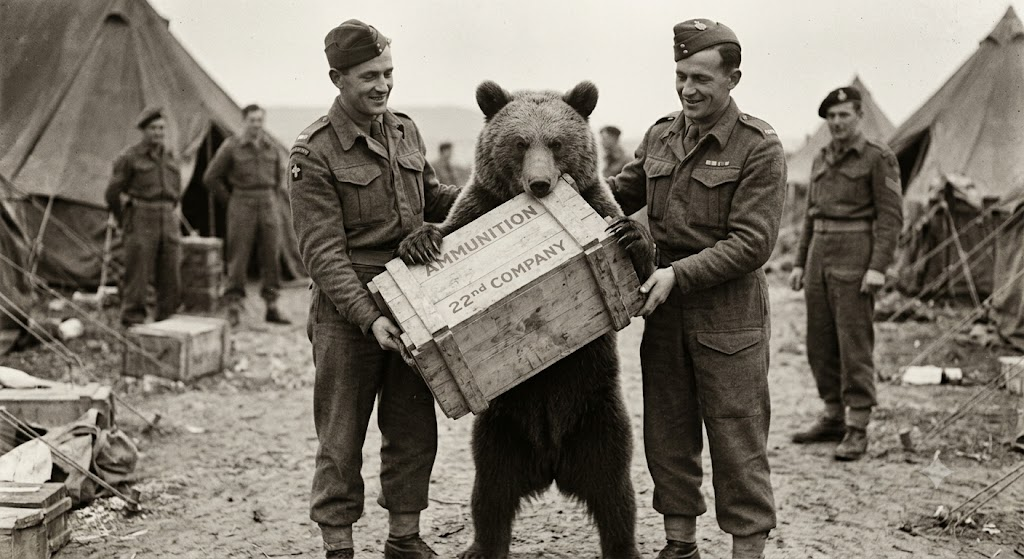
The Takeaway: Wojtek was eventually promoted to Corporal and retired peacefully to the Edinburgh Zoo. To this day, his image remains the official emblem of the 22nd Transport Company.
2. The 1904 Olympic Marathon Chaos
If you think modern sports events are wild, the 1904 St. Louis Olympic Marathon was practically a fever dream disguised as an athletic competition.
Out of 32 runners, only 14 finished. Here’s why:
- The “winner” drove 11 miles of the race in a car after getting severe leg cramps, then jogged across the finish line as a joke (and was almost awarded the gold medal).
- The actual gold medalist, Thomas Hicks, was kept going by his trainers using a mix of rat poison (strychnine) and brandy.
- A runner from Cuba, Felix Carbajal, stopped mid-race to eat apples from an orchard, got terrible food poisoning, took a nap, and still finished in 4th place.
3. The Penicillin Mold That Saved 200 Million Lives
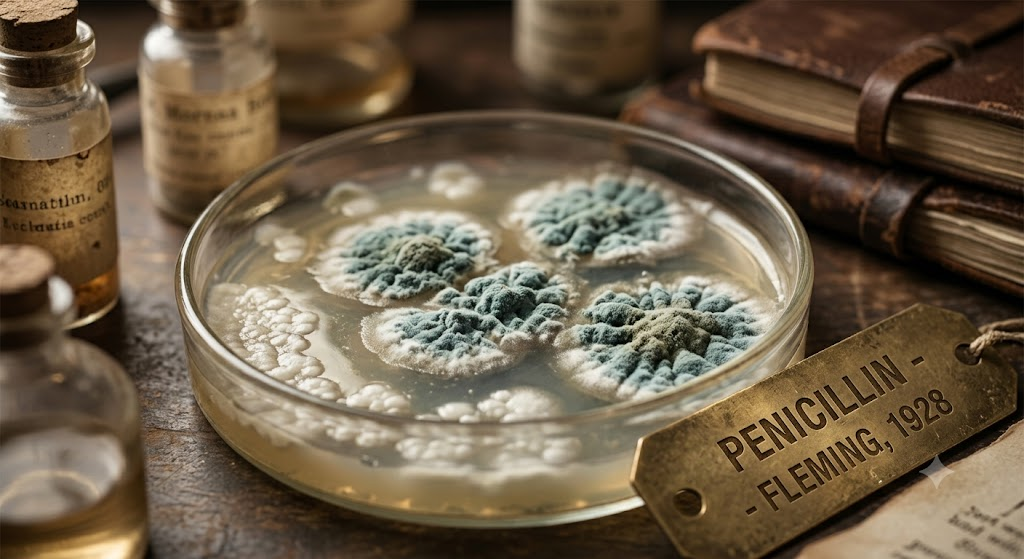
In 1928, Alexander Fleming was a notoriously messy scientist. Before leaving for a two-week vacation, he left several petri dishes of Staphylococcus bacteria sitting uncovered on his laboratory bench.
When he returned, he noticed something strange: mold had grown on one dish, and all the bacteria around it had been wiped out.
That “accidentally ruined” petri dish led to the discovery of penicillin, the world’s first real antibiotic. Prior to this lazy oversight, a minor scratch from a rose thorn or a tiny tooth infection could easily be a death sentence.
4. How a Leaky Boat Saved Modern Coffee Culture
Back in 1723, a French naval officer named Gabriel de Clieu was determined to bring a single coffee plant to the Caribbean island of Martinique.
The journey was a nightmare:
- His ship was attacked by pirates.
- They survived a brutal Atlantic tempest.
- Fresh water supplies ran critically low.
De Clieu literally shared his tiny daily water ration with his fragile coffee plant to keep it alive.
That one surviving plant flourished in Martinique. Within 50 years, its offspring spread across Central and South America, giving birth to over 18 billion coffee trees—the root of nearly all modern coffee production today!
5. The Ghost Army That Fooled Hitler
During World War II, the U.S. Army assembled a top-secret tactical unit known as the “Ghost Army.” But instead of weapons, this unit was made up of artists, actors, sound designers, and architects.
Their mission? Pure illusion.
Using inflatable rubber tanks, massive loudspeakers playing recorded army tracks, and fake radio chatter, they staged over 20 fake battles right near the frontlines. They tricked German intelligence into believing entire divisions were stationed where there was actually no one.
Estimates suggest this clever squad saved between 15,000 and 30,000 American lives through sheer creativity and theater.
Frequently Asked Questions
1. How do unknown historical events become verified facts?
Answer: Historical events are verified by historians through primary sources like military logs, official government records, letters, and eyewitness journals. For instance, Private Wojtek’s military service is documented in official British and Polish military archives.
2. Is it true that penicillin was discovered completely by accident?
Answer: Yes! Alexander Fleming left his laboratory dishes uncovered while away on vacation. When he returned, a naturally occurring mold (Penicillium chrysogenum) had contaminated the dish and killed the surrounding bacteria, leading to the world’s first modern antibiotic.
3. How many coffee trees originated from Gabriel de Clieu’s single plant?
Answer: Historians estimate that over 80% of the coffee plants in the Americas today trace their genetic lineage back to that single surviving coffee sapling brought to Martinique in 1723.
4. What was the main purpose of the World War II Ghost Army?
Answer: The 23rd Headquarters Special Troops (the “Ghost Army”) used visual, audio, and radio deception—including rubber inflatable tanks and giant speakers—to trick German commanders about the location and size of Allied forces.



Pingback: 10 Ancient Civilizations That Were Far More Advanced Than You Think (2026 Guide)