The Lost City of Atlantis: Myth, Mystery, or Hidden Truth?

For thousands of years, people have been fascinated by the story of Atlantis—a magnificent city said to have disappeared beneath the ocean in a single day and night.
Was Atlantis a real place? Or was it simply a story created to teach a lesson?
Even today, the mystery continues to inspire books, movies, documentaries, and countless theories. Let’s explore one of history’s greatest unsolved mysteries.
What Is Atlantis?
The earliest known mention of Atlantis comes from the ancient Greek philosopher Plato around 360 BCE.
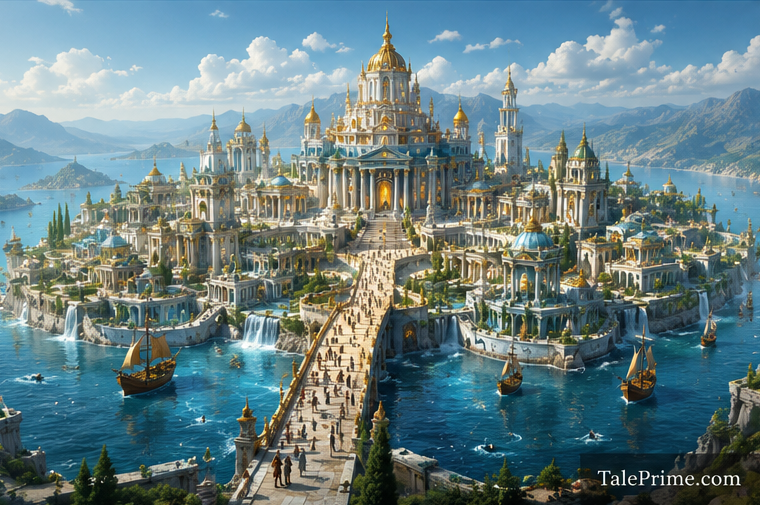
According to Plato, Atlantis was a powerful island civilization located beyond the “Pillars of Hercules” (believed to be the Strait of Gibraltar).
The city was said to be incredibly advanced, wealthy, and beautiful. It featured impressive architecture, canals, and a strong military.
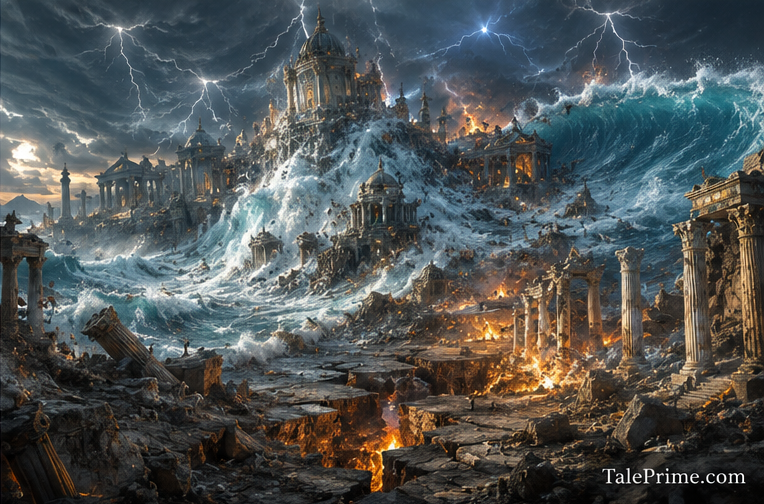
However, Atlantis became arrogant and corrupt. As punishment, the gods supposedly destroyed the island, causing it to sink into the sea.
Why Does Atlantis Fascinate People?
Atlantis combines everything people love about a great mystery:
- A lost civilization
- Advanced technology
- Hidden treasures
- Ancient secrets
- Unexplained disappearance
The idea that an entire civilization could vanish without a trace continues to capture imaginations around the world.
Popular Theories About Atlantis
1. Atlantis Was Real
Some researchers believe Atlantis may have been based on a real ancient civilization.
Possible locations include:
- The Mediterranean Sea
- The Atlantic Ocean
- Near Greece
- The Caribbean
- Antarctica
However, no definitive evidence has ever been found.
2. Atlantis Was Inspired by a Natural Disaster
One popular theory links Atlantis to the ancient Minoan civilization on the island of Crete.
Around 1600 BCE, a massive volcanic eruption on Thera (modern-day Santorini) caused devastating tsunamis and destruction.
Some historians believe this disaster may have inspired Plato’s story.
3. Atlantis Was Pure Fiction
Many scholars believe Atlantis was never meant to be a real place.
Instead, Plato may have created the story as a warning about greed, power, and moral decline.
This remains the most widely accepted explanation among historians.
Strange Discoveries Linked to Atlantis
Over the years, explorers have claimed to find:
- Underwater structures
- Mysterious stone formations
- Ancient ruins beneath the ocean
Despite exciting headlines, none of these discoveries have conclusively proven the existence of Atlantis.
Atlantis in Popular Culture
The legend has inspired countless works including:
- Movies
- Video games
- Novels
- TV documentaries
Its enduring popularity shows how much people love mysteries that challenge our understanding of history.
Could Atlantis Ever Be Found?
Modern technologies such as deep-sea mapping, underwater drones, and satellite imaging are helping scientists explore parts of the ocean never studied before.
While no evidence of Atlantis has been discovered yet, many believe the search is far from over.
Final Thoughts
Whether Atlantis was a real civilization, a memory of an ancient disaster, or simply a philosophical story, its mystery continues to fascinate humanity.
Perhaps the greatest treasure of Atlantis isn’t a lost city—but the curiosity and imagination it inspires in all of us.
What do you think? Was Atlantis real, or just one of history’s greatest legends?
Frequently Asked Questions (FAQ)
1. Was Atlantis a real city?
Answer: No definitive evidence has been found proving Atlantis existed.
2. Who first wrote about Atlantis?
Answer: The ancient Greek philosopher Plato.
3. Why is Atlantis famous?
Answer: Because it is one of history’s most intriguing lost civilization stories.
4. Has Atlantis been discovered?
Answer: No confirmed discovery has been made so far.
5. Why do people still search for Atlantis?
Answer: Its mystery continues to inspire curiosity and exploration.