The Green Children of Woolpit: The Medieval Mystery Nobody Can Explain
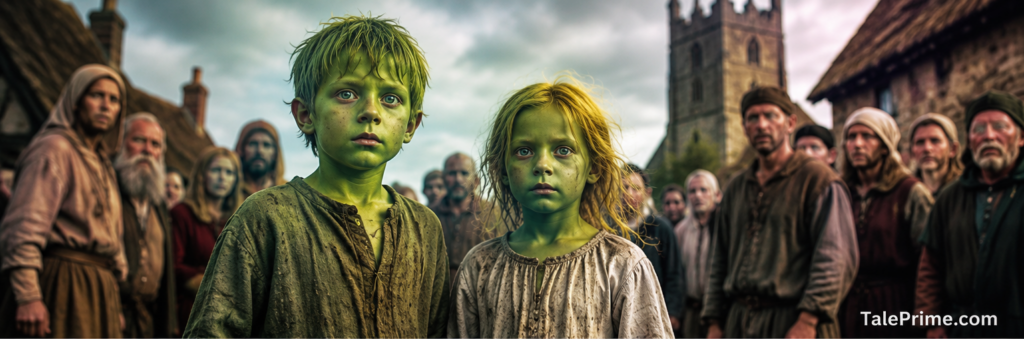
Imagine villagers discovering two children with green skin who spoke an unknown language and claimed to come from a land where the sun never shone brightly.
This sounds like science fiction, but according to medieval records, it actually happened.
- English Heritage: https://www.english-heritage.org.uk
- Historic UK: https://www.historic-uk.com
The Strange Discovery
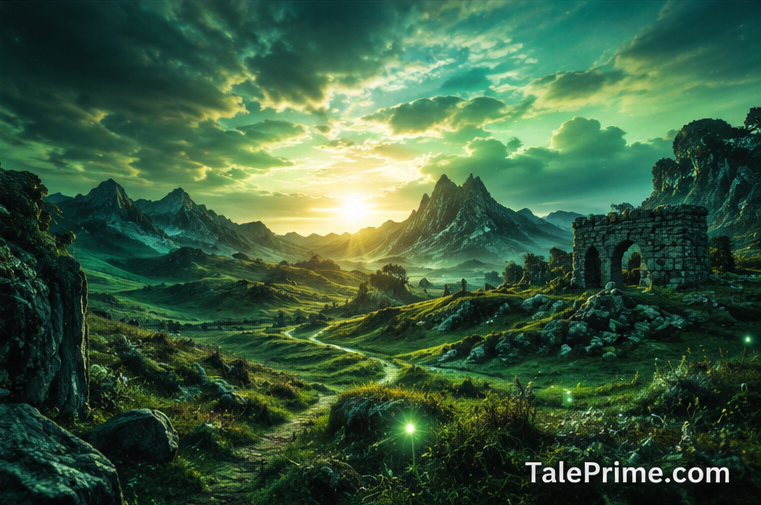
- Around the 12th century in Woolpit, England
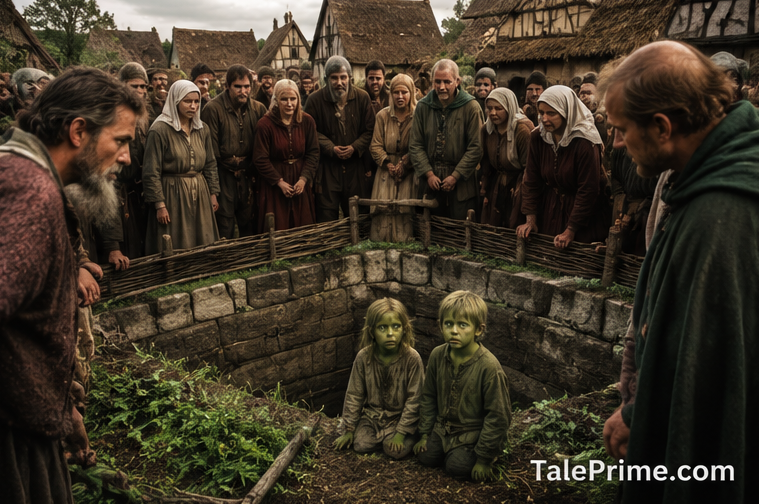
- Villagers found a boy and a girl near wolf pits
- Their skin was reportedly green
- They spoke a language nobody understood
- British Library Medieval History Resources: https://www.bl.uk
The Children’s Story
- They claimed to come from a place called “St. Martin’s Land”
- The land was always in twilight
- Everything there appeared green
- They became lost after hearing strange bells
What Did the Children Eat?
One of the strangest details in the story is that the children reportedly refused all food offered to them.
For several days, they would eat nothing.
Eventually, they discovered raw beans and eagerly consumed them.
According to the legend, beans remained their primary food source for some time before they gradually adapted to a normal diet.
This unusual behavior has fueled theories that the children came from a different culture—or perhaps somewhere even stranger.
What Happened Next?
- The children slowly adapted
- Their green skin faded over time
- The boy died young
- The girl survived and learned English
Historical Sources Behind the Story
The story of the Green Children of Woolpit survives thanks to two medieval chroniclers:
Ralph of Coggeshall
Ralph was an English monk who recorded many unusual events of his time. His account is one of the earliest references to the Green Children.
William of Newburgh
Another historian who wrote about the mysterious children in his historical records.
Because both writers documented the story independently, historians believe there may be some truth behind the event, even if details became exaggerated over time.
Popular Theories
- Lost foreign children
- Medical condition causing green skin
- Medieval folklore
- Visitors from another dimension
- Time-travel or extraterrestrial theories
- History Extra: https://www.historyextra.com
- Smithsonian Magazine: https://www.smithsonianmag.com
Why It Remains Unsolved
No one knows exactly who the children were or where they came from.
Conclusion
Nearly 900 years later, the Green Children of Woolpit remain one of history’s most fascinating mysteries.
Encyclopedia Britannica: https://www.britannica.com
Frequently Asked Questions (FAQ)
1. What is the Green Children of Woolpit mystery?
Answer: The Green Children of Woolpit is a medieval legend about two children with green-colored skin who appeared in the English village of Woolpit during the 12th century.
2. Were the Green Children real?
Answer: The story comes from historical accounts written by medieval chroniclers, but there is no definitive evidence proving exactly what happened.
3. Why was their skin green?
Answer: Some historians believe malnutrition or a medical condition called chlorosis may have caused the unusual skin color.
4. What language did the children speak?
Answer: Witnesses reportedly said the children spoke an unknown language that nobody in the village could understand.
5. What is St. Martin’s Land?
Answer: According to the story, the children claimed they came from a mysterious place called St. Martin’s Land, where everything appeared green and sunlight was dim.
6. Is there a scientific explanation?
Answer: Several theories exist, including foreign immigrants, malnutrition, folklore, or misunderstandings that became legends over time.
7. Could the children have been aliens?
Answer: There is no scientific evidence supporting extraterrestrial origins, but the theory remains popular among mystery enthusiasts.
8. Why is the mystery still famous today?
Answer: The story combines history, folklore, mystery, and unexplained details, making it one of the most intriguing legends from medieval Europe.