
10 Online Scams Everyone Should Know in 2026 (And How to Avoid Them)
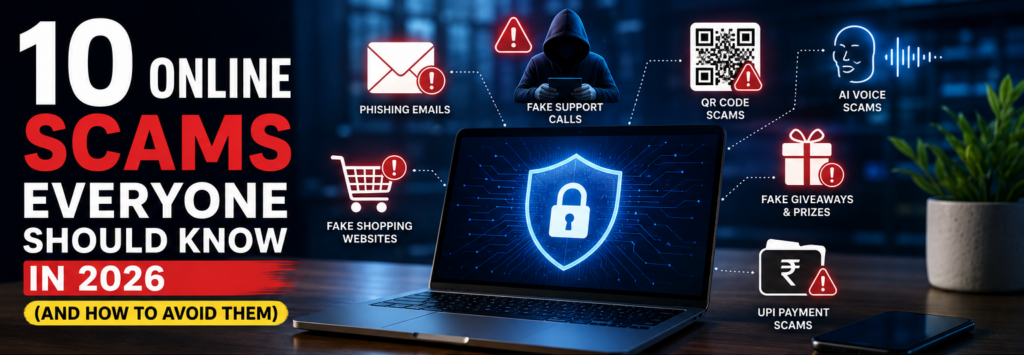
The internet has made life easier, but it has also given scammers new ways to trick people.
Every day, thousands of people lose money or personal information because of fake messages, phishing emails, fraudulent websites, and AI-powered scams.
The good news is that most online scams follow similar patterns. Once you know what to look for, you can avoid becoming a victim.
Here are 10 online scams everyone should know about in 2026.
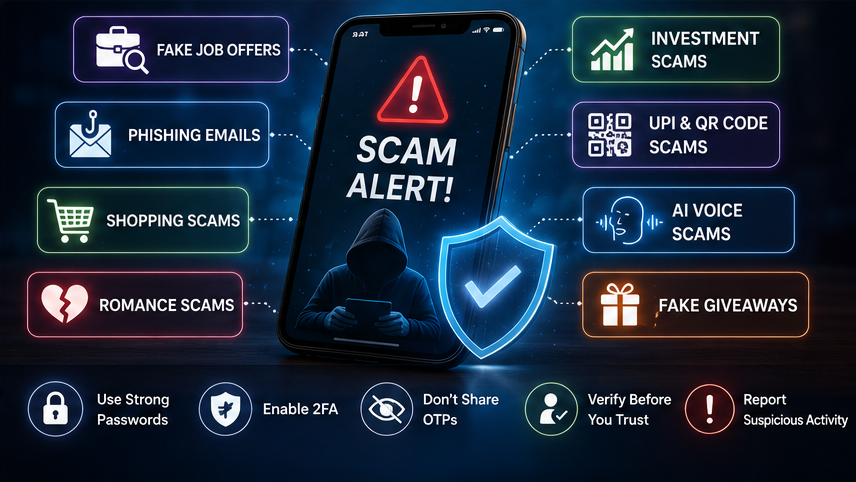
1. Fake Delivery Messages
You receive a text or email saying your package is waiting, but you need to click a link or pay a small fee.
How to stay safe:
- Track packages using the courier’s official website or app.
- Never enter payment details through links in unexpected messages.
2. UPI and QR Code Scams
A scammer asks you to scan a QR code to “receive” money.
In reality, scanning the code may initiate a payment from your account.
How to stay safe:
- Remember: To receive money, you usually don’t need to scan a QR code.
- Verify requests before approving any payment.
3. Fake Customer Support
Scammers pretend to be from your bank, internet provider, or a popular company.
They may ask for your OTP, PIN, or remote access to your device.
How to stay safe:
- Contact customer support using the official phone number or website.
- Never share OTPs or passwords.
4. AI Voice Clone Scams
Scammers can use AI to imitate someone’s voice and ask for urgent financial help.
How to stay safe:
- Call the person back using a trusted number.
- Ask questions only they would know.
5. Fake Job Offers
You receive an offer with a high salary and are asked to pay a registration or training fee.
How to stay safe:
- Legitimate employers rarely ask candidates to pay upfront.
- Research the company before applying.
6. Investment Scams
Promises of guaranteed high returns with little or no risk are a common warning sign.
How to stay safe:
- Be cautious of unrealistic returns.
- Verify investment opportunities with trusted financial sources.
7. Fake Shopping Websites
A website offers expensive products at unbelievably low prices.
How to stay safe:
- Check reviews and contact details.
- Look for secure payment methods.
- Avoid deals that seem too good to be true.
8. Phishing Emails
Scammers send emails pretending to be from banks, streaming services, or online stores.
They try to steal login details through fake websites.
How to stay safe:
- Check the sender’s email address carefully.
- Type website addresses manually instead of clicking links.
9. Social Media Giveaway Scams
Fake accounts promise free phones, cash, or gift cards in exchange for personal information or small payments.
How to stay safe:
- Verify giveaways on official brand accounts.
- Be skeptical of requests for payment or sensitive information.
10. Romance Scams
Scammers build trust over weeks or months before asking for money.
How to stay safe:
- Be cautious with online relationships involving financial requests.
- Avoid sending money to people you’ve never met in person.
Quick Safety Tips
- Use strong, unique passwords.
- Enable two-factor authentication.
- Keep your apps and devices updated.
- Verify requests before sending money.
- Think twice before clicking unknown links.
- Report suspicious messages to the relevant platform or authority.
Final Thoughts
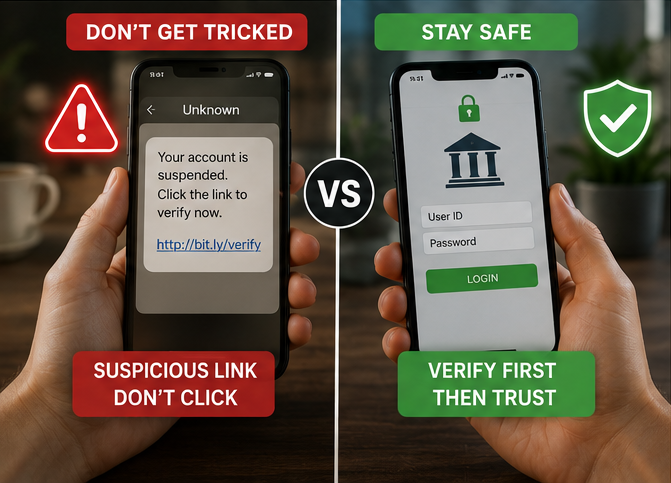
Online scams are becoming more sophisticated, but awareness is one of your best defenses.
Taking a few moments to verify messages, websites, and payment requests can help protect your money and personal information.
Share these tips with your family and friends so they can stay safer online too.
Frequently Asked Questions (FAQs)
1. How can I identify an online scam?
Answer: Look for urgent requests, unexpected links, spelling mistakes, unrealistic offers, and demands for personal or financial information.
2. What should I do if I accidentally click a suspicious link?
Answer: Disconnect if necessary, avoid entering information, run a security scan, and change passwords if you suspect your account may have been compromised.
3. Can AI be used in online scams?
Answer: Yes. AI can generate realistic emails, fake images, and voice clones, making some scams more convincing.
4. Are UPI scams common?
Answer: Yes. Fraudsters often use fake payment requests and QR code tricks. Always verify before approving transactions.
5. Should I trust messages claiming I’ve won a prize?
Answer: Be cautious. If you never entered a contest, it’s likely a scam. Verify with the official company before taking any action.
6. Is it safe to shop on new websites?
Answer: Research the website, read reviews, and use secure payment methods before making a purchase.
7. What is the safest way to protect my online accounts?
Answer: Use strong passwords, enable two-factor authentication, and keep your devices and apps updated.
Internal Links
- Hidden WhatsApp Features You Should Start Using
- 10 Everyday Things You Didn’t Know Google Could Do
- Best AI Tools That Save Hours Every Week
- Hidden Android Features You Should Know




Great content! Keep up the good work!